As technology becomes central to the guest experience, hotels are rethinking what they need from the infrastructure behind it. Speed, capacity, and security remain essential. Hotel IT systems also need to adapt as demands change, keep services running around the clock, and give teams the visibility to address risks before guests are affected. These challenges were the focus of “Beyond Connectivity: Hospitality IT for 24/7 Operations,” a workshop recently co-hosted by TPCOMS and IT Phú Quốc Group in Phú Quốc.


Phu Quoc’s resort sector is growing rapidly as more upscale hotels, resorts, and hospitality complexes open. Expectations for service quality are rising alongside that growth, and technology now shapes each stage of the guest journey, from booking and check-in to payments and the services guests use throughout their stay.
Property management systems (PMS), booking engines, guest Wi-Fi, surveillance cameras, IPTV, cloud platforms, and electronic payments now work as part of an interconnected system that directly supports the guest experience. An outage in any one of these systems can immediately affect guests, staff productivity, and revenue. For many hospitality businesses, building an integrated digital infrastructure with redundancy, monitoring, and rapid incident response has therefore become a strategic priority.
The Phu Quoc workshop was the next stop in TPCOMS’s Beyond Connectivity series, following events in Ho Chi Minh City and Khanh Hoa. The first workshop explored how to operate an entire digital infrastructure under a single service-level agreement (SLA). The second examined how hotels could consolidate work across multiple vendors under one point of accountability. In Phú Quốc, the discussion turned to keeping infrastructure running in locations with specific connectivity challenges.


That challenge is particularly relevant in Phú Quốc, where much of the island’s network infrastructure relies on undersea fiber-optic links to the mainland. This makes multilayer redundancy, optimized routing, and rapid incident response essential to keeping services available.
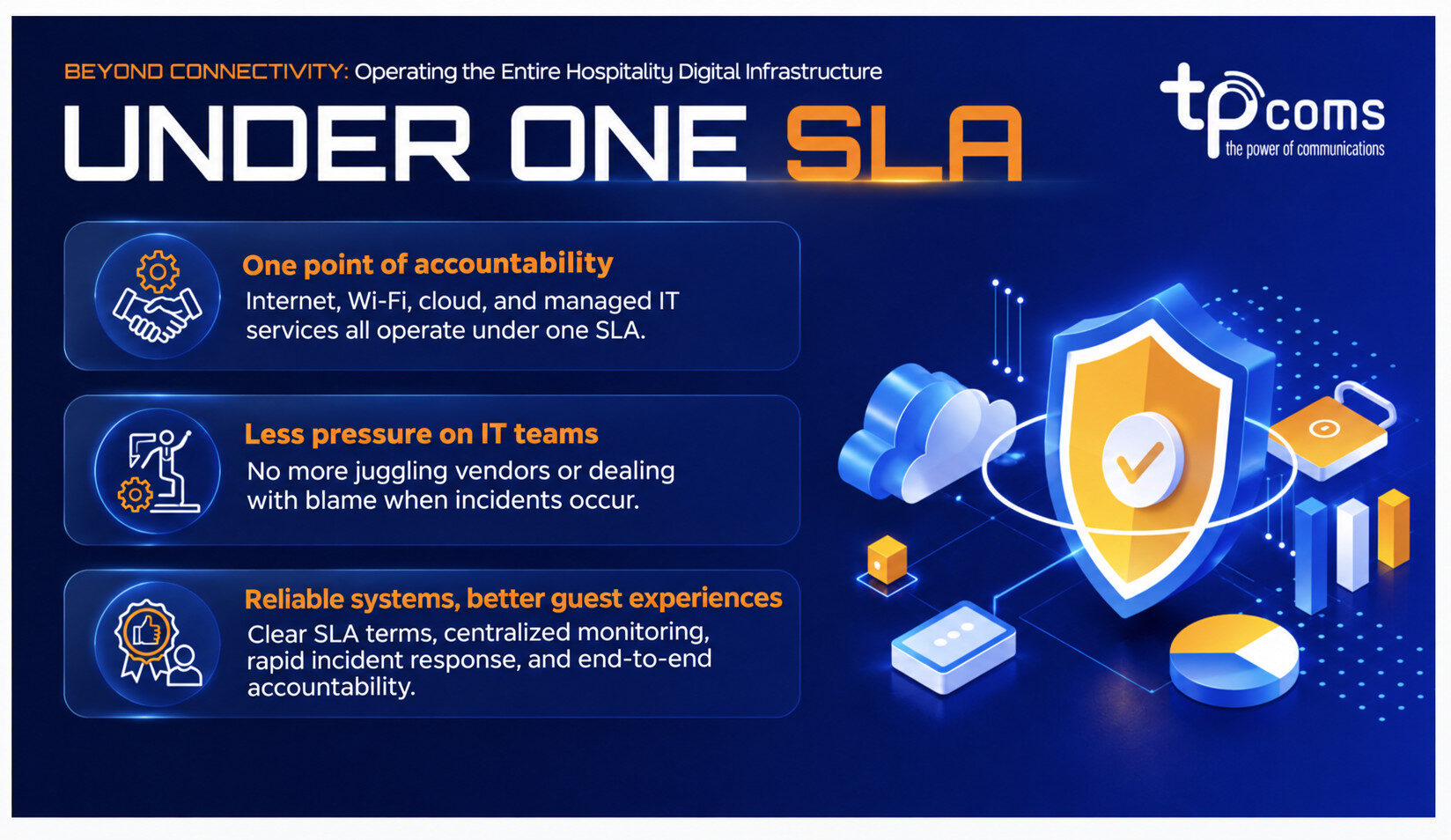
The workshop brought together IT managers, systems engineers, and representatives from hotels and resorts across Phú Quốc to discuss the challenges their teams face every day. One session focused on a digital infrastructure architecture for round-the-clock hotel operations. TPCOMS presented an end-to-end design spanning local networks, last-mile connectivity, MPLS and core network infrastructure, domestic and international peering, and cloud platforms. The design optimizes the path data takes from internal systems to external services, helping maintain consistent access speeds and reduce the risk of congestion or outages when connecting to AWS, Google Cloud, Microsoft Azure, and Oracle Cloud. Hotels increasingly rely on these platforms to run their management applications.
TPCOMS also discussed a common operational challenge in hospitality. Many hotels rely on separate providers for internet connectivity, Wi-Fi, and cloud services, while different teams handle security and technical support.
This arrangement can work in the early stages. When an incident occurs, however, determining who is responsible can complicate the response. In a hotel that operates around the clock, the time spent coordinating between providers can cause more disruption than the technical fault itself.
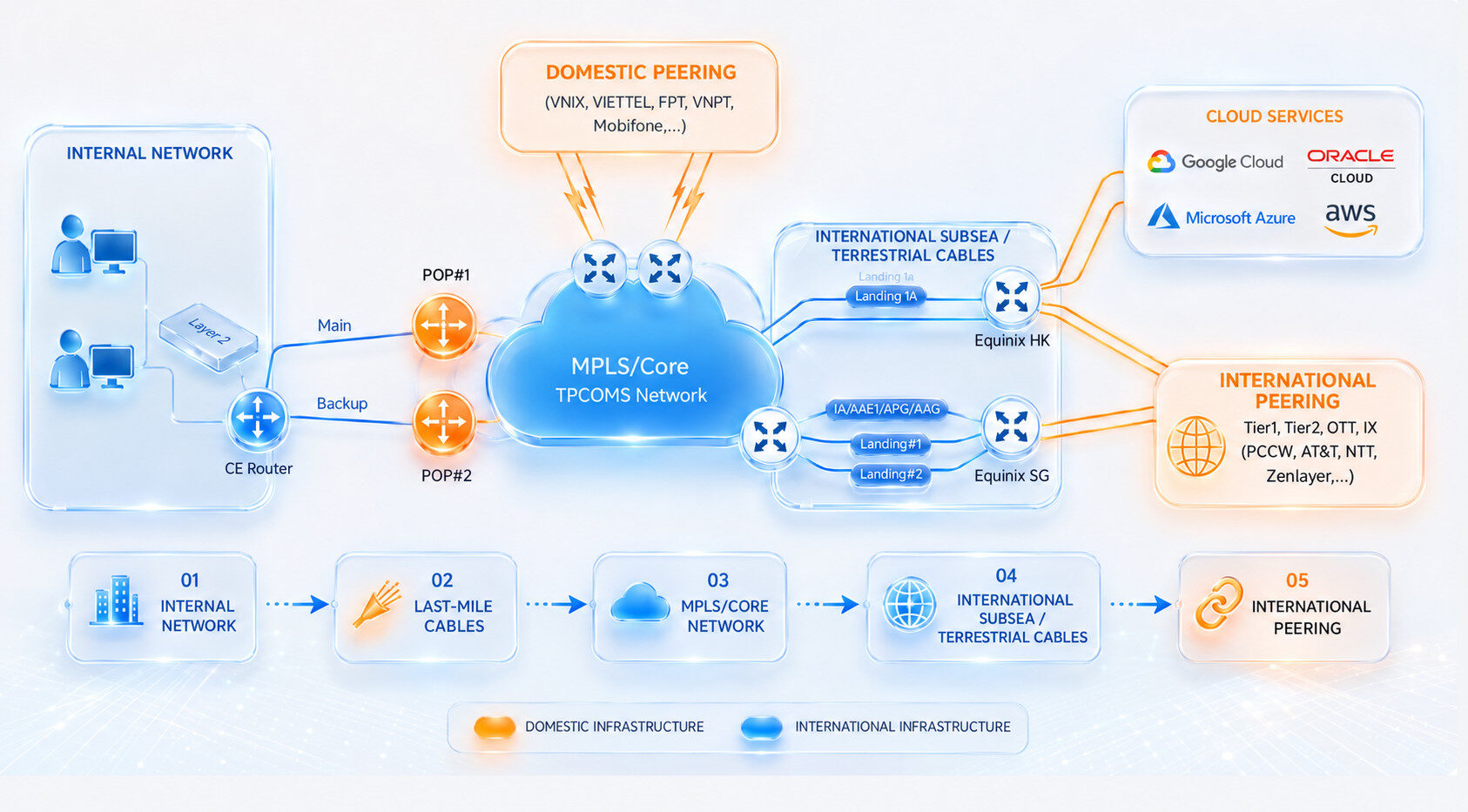
The One SLA model addresses this problem by bringing connectivity, Wi-Fi, cloud, security, and technical support under a single point of accountability. Hotels can oversee these services more easily, get faster responses, and coordinate incident resolution across the entire system.
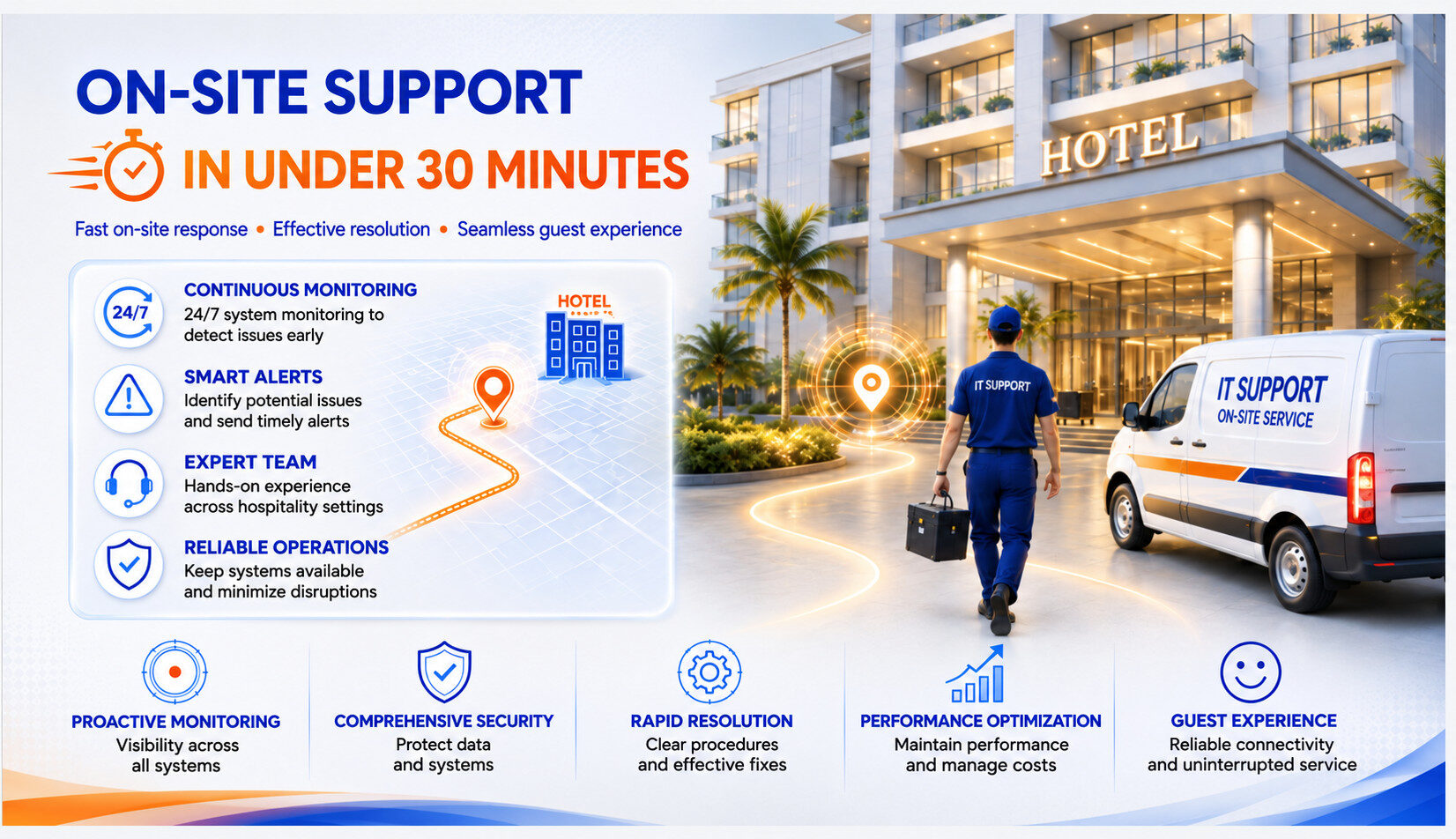
TPCOMS also outlined the scope of its IT services for hospitality. At the core of the offering, a 24/7 network operations center (NOC) monitors device status, network traffic, and alerts in real time.

Continuous monitoring helps the team spot risks early and act before guests are affected. TPCOMS also manages routers, firewalls, switches, and access points, and configures VLANs, routing, and quality of service (QoS) to suit how each hotel operates.
For network security, TPCOMS presented a segmentation model that uses firewalls, DHCP snooping, and ARP inspection to separate traffic for guests, staff, management, IoT systems, and external partners. This layer of protection helps reduce the risk of attacks originating within the network and limits how far an incident can spread.
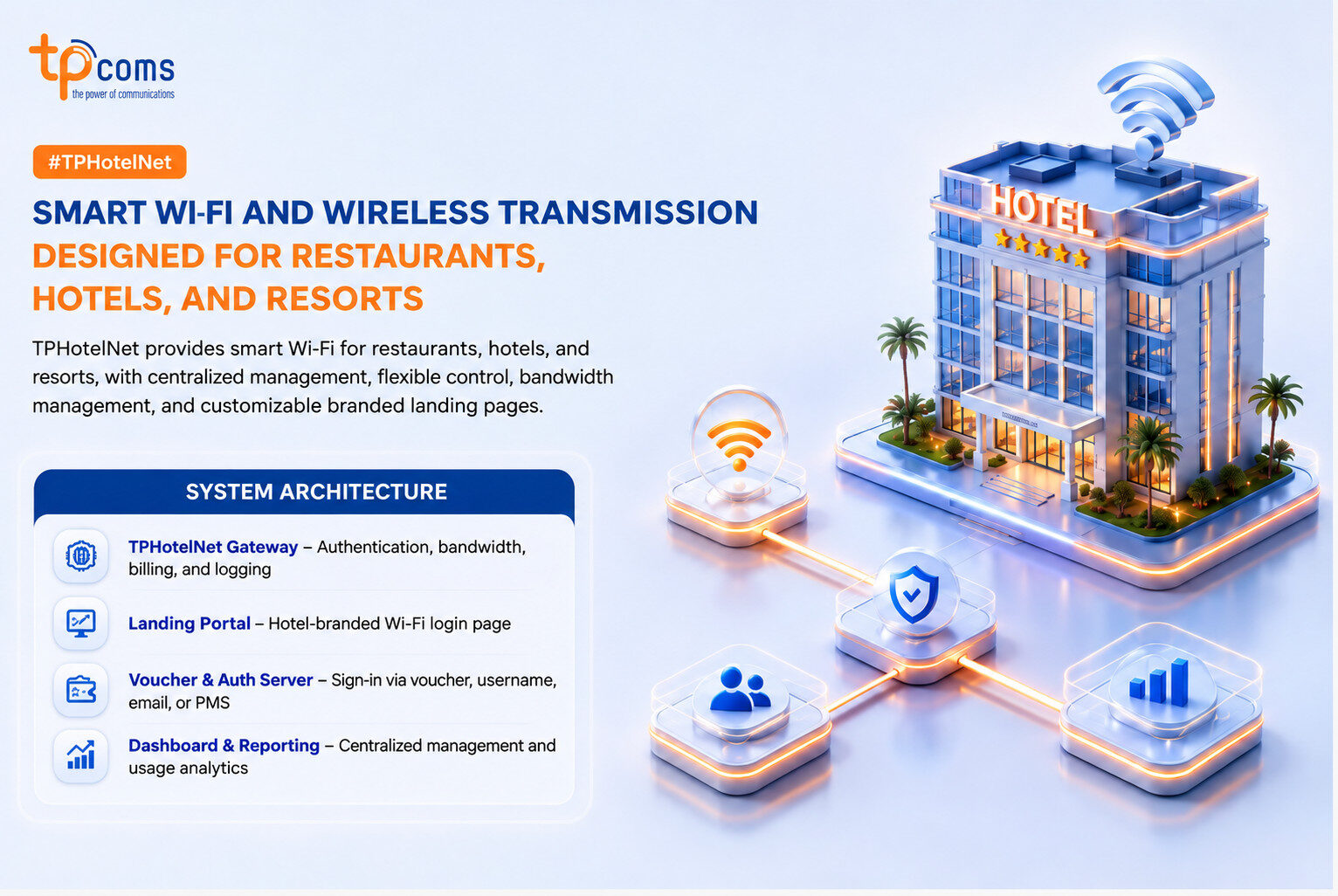
TPHotelNet drew particular interest from attendees. Built for hotels, the Wi-Fi platform supports PMS integration, a captive portal, a branded welcome page, and flexible authentication for individual guests. These features make it easier for guests to get online and help hotels align network access with their existing workflows.
TPCOMS also outlined its SLA commitments. The team acknowledges support requests within 15 minutes, begins remote troubleshooting as soon as the issue is confirmed, and provides on-site support within 30 minutes for critical incidents. When guests experience a disruption in real time, the speed of the technical response becomes part of the service they receive.
The workshop also highlighted the role of engineers in incident response. The NOC collects and analyzes data and raises alerts. Engineers use that information to assess what is happening and decide how to respond. TPCOMS’s operating model brings those monitoring capabilities and engineering expertise together.
Members of Phu Quoc’s hospitality IT community also exchanged practical experiences, from optimizing Wi-Fi across large resort properties and setting up backups for booking systems to improving access to international cloud platforms and strengthening internal network security.
Through the workshop, TPCOMS reaffirmed its commitment to supporting hospitality businesses with technology solutions and hands-on expertise in running their systems.


As hotels and resorts rely more on technology, investment in digital infrastructure is becoming part of their long-term growth strategies. The Beyond Connectivity series gives hospitality IT teams a place to share what they have learned in day-to-day operations, explore new approaches, and build more resilient systems for the years ahead.